

Backpack Angler’s Tackle Box: How to Lighten Up for Your Next Wilderness Fishing Hike

Imagine this scene: you carry your backpack, hike for hours, and finally reach that forgotten azure lake on the map. Only the wind, birds, and gentle lapping waves accompany you. You set down your pack, not to camp, but to assemble your tackle—not for the catch, but for a quiet conversation with this pristine body of water.
This is the charm of backpack fishing. It combines the satisfaction of hiking exploration with the purest joy of fishing. Yet, there is a practical enemy: weight. Carrying all survival gear and tackle for miles turns traditional heavy fishing rods and fully loaded tackle boxes from companions into burdens.
Today, we discuss how to “lighten the load” for your wilderness fishing adventures. This isn’t just about bringing less—it’s a philosophy of equipment efficiency, multifunctionality, and ultimate selection. Let’s rethink what a true “backpack angler’s tackle box” should look like.
The Core of Lightweight: Your Fishing Rod is the Biggest Opportunity to Reduce Load

When packing, the largest portion of your tackle in both volume and weight is usually the fishing rod. For backpack anglers, a standard two-piece rod (6–7 feet), even when collapsed, is like a long probe—awkwardly dangling from the backpack or awkwardly taking up internal space.
Solution? Multi-section travel fishing rods. Three- or four-piece designs can reduce a fully functional rod to a surprisingly compact length—easily fitting into your backpack’s main compartment alongside your sleeping bag and water bottle.
Some may worry extra joints compromise strength or sensitivity. Trust me, modern high-density carbon fiber and precision interface craftsmanship reduce such effects to nearly imperceptible levels. For unparalleled portability, this minor compromise is worth it for any wilderness angler.
The key: don’t sacrifice everything just for compactness. A proper backpack fishing rod must find the golden balance between portability, strength, and feel.
The Art of Versatility in the Wild: When “Specialization” Yields to “Adaptation”
In conventional fishing, we value “dedicated rods for dedicated tasks.” On a backpack trip, you must become an equipment minimalist and scenario pragmatist. You cannot carry a specialized fishing rod for each trout, bass, or creek panfish you may encounter.
Your “all-purpose” travel fishing rod needs a versatile soul. It must have a sensitive tip to detect a subtle tap from highland stream trout on a tiny fly or micro spinner, yet enough backbone to handle a sudden strike from a bass on the lakeshore or to cast a slightly larger spoon lure for distance.
Look for rods designed with a medium-fast to fast action. This provides clear bite feedback while retaining sufficient power for fish control. The ideal lure weight range should cover extremely light (1/16 oz) to medium weight (1/2 oz), giving flexibility for various waters.
Some fishing rods are designed precisely with this philosophy. For example, a premium carbon fiber ultra-light trout/freshwater small fish rod may weigh only 101 g. Even after long hours of holding and casting, your wrist and arm feel almost no fatigue—crucial after a hike.
Extreme lightweight does not mean sacrificing strength. High-quality carbon fiber ensures excellent vibration transfer so you can detect subtle bites, even the feel of your lure brushing pebbles. Its design also includes tolerance for unexpected situations in the wilderness—a snag or slightly larger fish won’t break it.
The Minimalist Art: Reels, Lines, and Lures
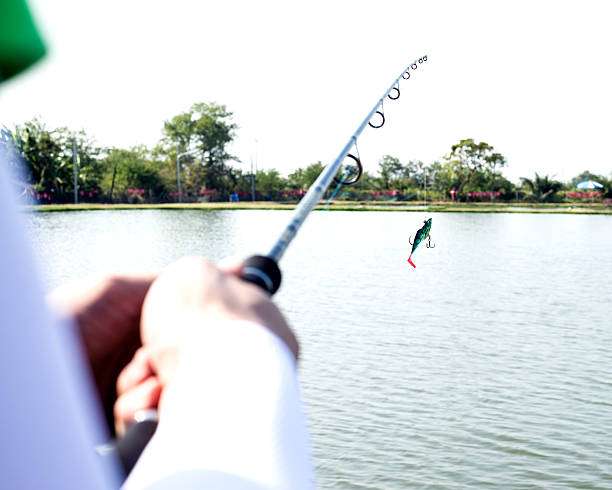
With your fishing rod chosen, the rest of your tackle must follow a “less is more” principle.
- Reels: Choose a medium-small spinning or baitcasting reel matching your rod’s weight. Prioritize reliability and smoothness over flashy features. A lightweight reel with quality rust-resistant bearings and moderate line capacity suffices. Reliability always comes first in the wilderness.
- Line: Don’t carry a full spool. Pre-load your reel with enough mainline (e.g., 6–8 lb fluorocarbon or braided line) and bring a small backup spool. Consider a compact flat-line box for storage.
- Lure box: Forget the giant box with 300 compartments. Choose a thin plastic or soft lure pouch with just a few sections. Keep a few lead-head soft baits of different colors and weights, one or two small spoons, and one or two small surface or pencil lures—enough to cover most water column conditions.
- Accessories: A multifunctional plier/line cutter, a small board of spare hooks and connectors, and a lightweight hook remover. That’s your entire kit.
Every Gram Counts: Beyond Guides
Every detail matters in extremely optimized gear. Take the 101g ultra-light rod: its premium ceramic guides aren’t just “for show.” Frequent casting in the wilderness requires smooth line flow, saving energy and enabling longer casts—every saved joule extends your reach and fishing time. Reduced friction also minimizes wear on fragile lines, which is critical when far from resupply.
It’s optimized for one-handed frequent use, allowing you to hold the rod while moving on rugged banks or accessing your pack. This seamless experience integrates fishing with hiking, rather than being a cumbersome add-on.
FAQ
Q: Is such an ultra-light travel fishing rod strong enough for larger fish? For example, what if I encounter a decent bass in the lake?
A: Absolutely. Modern high-density carbon fiber is stronger than imagined. Key: use it appropriately. A well-tuned ultra-light fishing rod can safely handle fish matching its line setup. Its “lightness” enhances sensitivity and reduces fatigue, not fragility. Heavy, tens-of-pounds fish aren’t its target, but it’s more than capable for most freshwater species on backpack trips.
Q: Should I choose a two-piece or three/four-piece fishing rod for backpack fishing?
A: Depends on backpack space and hiking distance. For long-distance backpacking, three- or four-piece fishing rods are king—they fully fit inside a pack, avoid snagging, and balance weight. Two-piece rods have fewer joints and may feel more “integrated,” but often require external attachment, which can be inconvenient in dense forests. For ultimate compactness, multi-piece rods offer unmatched convenience.
Conclusion: Backpack Fishing is a Practice of Focus and Trade-Off
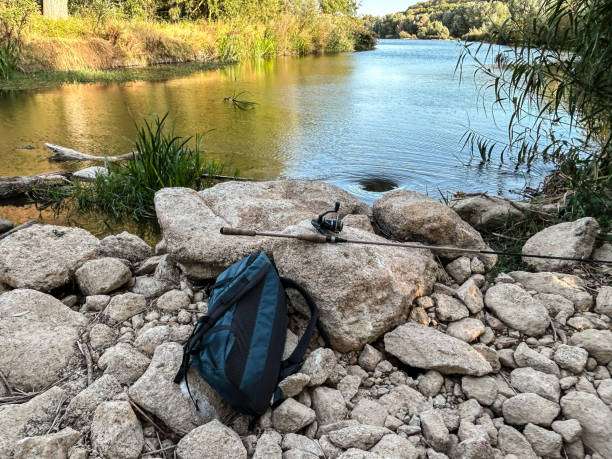
It strips away excessive gear and complexity, returning to the essence: interaction between human, nature, and fish. Achieving this pure experience hinges on your choice of tackle—not measured by quantity or specialization, but by efficiency, adaptability, and alignment with your travel philosophy.
Imagine a carbon fiber fishing rod weighing only as much as a smartphone, sensitive enough to detect underwater movements, accompanying you across mountains and lakes. It is no longer just gear. It is a carefully designed tool, a feather-light companion, minimizing physical load and amplifying freedom and immersion in nature.
When planning your next wilderness hike, reconsider your tackle box with this mindset. Choose gear that truly serves your journey, making every cast a lighthearted greeting to the vast outdoors.
Related Posts
Your First Tackle Set: Avoid These 3 Costly Beginner Mistakes
-
Posted by
 Billy C. Jones