


Standing in front of the fishing section at a sporting goods store, or scrolling endlessly through online product pages, how do you feel? Excited, yes. But more often, overwhelmed with confusion.
Countless fishing rods, reels, and lines, each claiming to be the “best choice.” As an enthusiastic beginner, you just want to buy a set of gear and enjoy the peace and rewards by the water. However, a wrong start can not only waste your budget but also quickly extinguish the spark of passion for fishing.
Today, we won’t discuss complex theories. Instead, let’s talk about money and experience. As someone who’s been through it, I’ve seen too many beginners (including myself back in the day) repeat a few expensive mistakes when buying their first tackle set. Avoiding them will make your fishing journey much smoother from the start.
Mistake 1: Chasing the Nonexistent “All-Purpose Magic Fishing Rod”
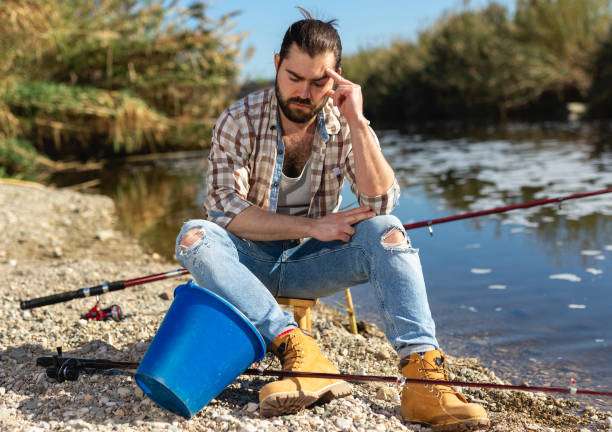
This is the classic and most tempting trap for beginners.
We all hope to find a fishing rod that can handle trout in a small creek, bass on a weekend lake trip, and even a few casts on a seaside vacation.
Sounds perfect, right? The reality is, such a “magic rod” is like a “do-it-all car”: it cannot race on the track, nor can it off-road in the wild, ultimately performing mediocrely in every scenario.
Fishing gear, especially fishing rods, derives its charm from specialization.
A super-light rod designed for precise control of small soft baits in softweed areas, with its delicate tip and sensitive action, is fundamentally different from a beach casting fishing rod built to throw heavy leads far into the surf.
Using the former for the latter task will only lead to frustration—short casts, missed bites, or even broken fishing rods.
Smart starting strategy:
Ask yourself one simple question: “Where am I most likely to fish in the next three months?” A city park pond? Nearby lakes and rivers?
Choose your first fishing rod based on your primary scenario. A set optimized for your most common “home field” brings far more success and joy than a mediocre “all-purpose” setup.
For example, a high-density carbon fiber three-piece rod is a wise choice. While it may not be the top specialist in any single field, it smartly covers the broad scenarios beginners are most likely to encounter.
From creek trout to lake carp, from lure fishing to basic fly techniques, it can handle them all. Its three-piece design also allows for compact storage in a car trunk or cabinet, solving transport and storage issues.
The first lesson it teaches: gear that is suitable and easy to use is the best gear.
Mistake 2: Ignoring the Hidden Cost of “Weight” and “Feel”
The second common mistake beginners make is focusing too much on paper specs—length, power—while ignoring how the gear actually feels in hand.
You may choose a fishing rod with impressive specs or a reel with large line capacity. But imagine this scenario: excitedly at the water, you start casting. Twenty minutes later, your wrist aches.
An hour later, your forearm is stiff from constant effort. What should have been enjoyment becomes a battle of endurance.
Fatigue not only robs the fun but also leads to poor technique, decreased focus, and missed bites.
The “feel” and “weight” of your tackle are not luxuries; they are necessities.
A fishing rod made from modern carbon fiber can provide sufficient strength while reducing weight to a pleasurable level. Over prolonged use, that difference of a few tens of grams determines whether you enjoy or endure your session.
Likewise, an ergonomically designed reel handle makes reeling more natural and effortless.
Always prioritize lightweight construction and ergonomic design when selecting your first set. Your body will thank you, and you can focus on fishing rather than struggling with your equipment.
Mistake 3: “Pinching Pennies” in the Wrong Place
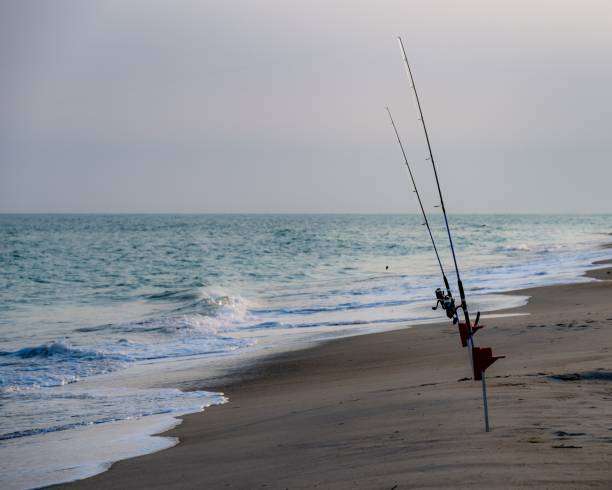
We all want to control our budget, which is valid. But tackle systems follow a “weakest link” principle: the experience depends on the weakest component.
The most common cost-cutting mistake: spending a lot on a decent rod but pairing it with a very cheap reel with poor smoothness.
The result:
- Poor line release during casting, leading to short distances or frequent line breaks.
- Loud, inconsistent drag during fights, causing anxiety at critical moments.
- Rough feel that quickly erodes patience and enjoyment.
This “weak link” mercilessly drags down the performance of your entire setup.
The smart investment logic: prioritize reliability in core combat components.
For most beginner scenarios, this means the rod and reel are your main focus. A mid-range, well-matched fishing rod-and-reel combo delivers far more enjoyment and success than an unbalanced setup where one part is over- or under-emphasized.
You can start with a budget-friendly spool of line and a few basic lures, but give your fishing rod and reel the respect they deserve. This is not an encouragement to splurge, but a guide to establishing clear priorities: build a solid, reliable core platform first. Once you gain confidence and fun from this platform, upgrading accessories becomes a natural next step.
Frequently Asked Questions (FAQ)
Q: As a beginner, should I buy top-tier gear or start with a cheap entry-level set?
A: Neither is absolute. Avoid extremely cheap “toy-level” sets—their poor experience is often discouraging. Also, there is no need to go all-in on top-tier gear immediately, because you don’t yet know which fishing style you’ll ultimately prefer.
The best starting point: choose a well-reviewed, mid-range set suited to your target scenario. Build interest and basic skills first, and your hands and mind will guide your next upgrade.
Q: Do I need to buy all fishing gear at once?
A: Absolutely not! Attempting to do so creates stress and confusion.
A sensible shopping list:
- 1 fishing rod
- 1 matching reel
- 1 spool of appropriate line (have the shop load it)
- 1 small box of basic lures (e.g., soft grubs, small spoons)
- Line cutters and a hook remover
That’s it! Start fishing. In practice, you’ll quickly realize what else you need (a bucket, sun protection, polarized glasses) and can add them later.
Conclusion: Start Smart, Fish Happy
Purchasing your first tackle set is not a perfectionist challenge but a joyful ritual for a new hobby.
The key is to avoid common traps that cause detours.
Forget the elusive “all-purpose rod.” Choose a rod suited to your “home field,” lightweight, and comfortable in hand. Do not compromise excessively on the two core pieces you’ll hold all day.
Just like the high-density carbon fiber three-piece rod embodies: reliability, adaptability, and minimizing beginner hassles.
It allows you to approach the water more easily and enjoy the process more fully.
The best first tackle set is not the most expensive, but the one you can confidently grab, walk to the water, and start casting with a smile.
Start your fishing journey with a well-matched fishing rod and reel combo that ensures comfort, smooth casting, and reliable performance for beginners.
Related Posts

Backpack Angler’s Tackle Box: How to Lighten Up for Your Next Wilderness Fishing Hike
-
Posted by
 Billy C. Jones