

Restoring an Old Fishing Rod: A Dialogue with Time, Ancestry, and Craftsmanship

Dust dances in the slanted sunlight of the attic. Behind an old toolbox, you find it—a forgotten fishing rod.
The varnish is mottled, the guides rusted, and the cork handle darkened by years and the oils of hands past. You gently pull it out, and the joints whisper with subtle friction. It doesn’t belong to you, perhaps your father, or an older relative, or maybe it’s just the impulsive first purchase of your youth, replaced by newer, flashier gear.
At this moment, you face a choice: let it sleep and collect dust until discarded, or give it a second life? Restoring an old fishing rod is more than maintenance; it is a conversation across time, a tribute to craftsmanship, and a quiet journey inward.
Assessment: Choosing Restoration Over Disposal in a Decluttering Age
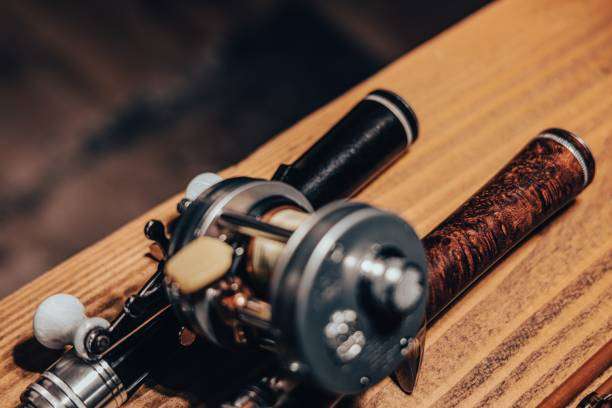
We live in an era of “declutter and immediate satisfaction.” When things age or break, the reflex is to replace them—efficient, convenient. But some items carry weight. Picking up this old rod, the first step is to judge: is it worth restoring?
This isn’t purely financial. Examine its “skeleton”: are there structural cracks in the carbon or fiberglass? Especially at the joints and tip, severe breaks compromise safety, making restoration futile. If the damage is merely “cosmetic”—fallen or rusted guides, chipped varnish, loose handle—then its soul (unique flex and taper) may remain intact.
Deciding to restore is deciding to resist consumerist inertia. You invest time, patience, and a touch of skill to save a fragment of history. This fishing rod may no longer be the lightest or strongest, but the stories it will carry are irreplaceable by any new gear.
The Restoration Process as Meditation: Shaking Hands with Time
True restoration begins. This is not assembly line work, but a sequence of mindful, ritualistic steps.
You carefully cut old wraps and remove rusted guides with a blade or heat gun. As the last guide comes off, revealing the bare fishing rod, it’s like peeling old skin from a friend. Then, patiently sanding the blank removes aged varnish and glue residue, gently and evenly, as if smoothing the wrinkles of an old companion.
Next comes selecting new guides, comparing sizes to match fishing rod action. Wrapping them is both the heart of restoration and a meditative act. Sitting under a work lamp, you coil soft thread tightly and evenly. The world shrinks to the inch before you: only the reel’s hum and your own breath. Each wrap demands focus—no overlaps, no gaps—a forced mindfulness that clears everyday clutter and anxiety.
Applying glue, curing, and finally a protective varnish. Holding it to the light, seeing the new guides in perfect alignment, the subtle texture of carbon beneath smooth varnish, a profound satisfaction arises. You’ve not created anew, but restored dignity to the old.
Beyond Functionality: When a Fishing Rod Becomes a Story Carrier

After restoration, the fishing rod’s performance may reach only 80% of its prime, but it gains something new: narrative.
It may become your “story rod.” You won’t race or chase monsters with it, but on a leisurely weekend, you bring it to familiar waters. The cork handle retains the warmth of past hands; each fish bite, transmitted through the restored blank, feels like a high-five with the past.
It becomes an heirloom. You can tell children or friends, “See, I tied these guides myself. This rod is older than I am.” It connects generations, turning patience, focus, and appreciation into tangible lessons in a tactile object.
This contrasts with modern fishing rods: ultra-light carbon rods with premium ceramic guides, designed for ultimate bite sensitivity and operational efficiency. They are precise tools, engineered for consistency.
Restoring an old fishing rod offers a different form of ownership: intimate, marked by handcraft. Knowing every scar and repair transforms the relationship from user-tool to guardian-companion.
The Echo of Modern Craftsmanship: Appreciating Skill Through Preservation

This dialogue with old gear deepens appreciation for modern rods. Only by wrapping guides yourself do you realize why ceramic guides are essential—they’re the product of countless iterations to reduce friction, protect line, and enhance sensitivity.
Matching guides to an old fishing rod’s action teaches the care taken to calibrate modern carbon rods for “ultra-fast action” and optimal vibration transfer. Restoration turns a “consumer” into a “comprehender,” instilling reverence for all fishing gear.
Restoring old fishing rods and precision-manufacturing modern rods are two sides of the artisan spirit: one preserves, and one innovates. Together, they show that a quality rod is never just material but understanding, patience, and wisdom embodied.
FAQ
Q: I have no manual experience—can I try restoring an old rod?
A: Absolutely. Restoration’s value lies in the learning process. Start with replacing a simple single-foot guide. Many detailed tutorials exist online. With basic tools (thread, glue, quick-dry varnish), spend an afternoon—aim for completion, not perfection. You’ll be surprised by the calm and satisfaction gained, and the rod becomes uniquely yours due to your “imperfect” handiwork.
Q: How do I judge whether an old fishing rod’s damage is worth repairing? Are there absolutely no-go cases?
A: Core principle: repair “cosmetic damage,” beware “structural damage.” Worth repairing: rusted/fallen guides, chipped/peeled varnish, loose/damaged handle, and minor joint wear. Avoid repair if there are longitudinal cracks in carbon/fiberglass (> a few cm), significant bends that won’t rebound, or a broken tip with a jagged end. When uncertain, consult a professional rod maker or repairer.

In this dizzying, fast-paced world, restoring an old object is a deliberate act of slowness. Restoring a fishing rod restores not only gear but also a neglected slice of time, a nearly forgotten skill of connecting with objects by hand, and an inner calm achieved in the process.
Next time you find a dusty old fishing rod, pause. It may await rebirth and a patient listener. When you restore and cast it again, the arc of its line connects past, present, and future—calm, yet powerful. Perhaps this is the deepest, most lasting gift a fishing rod can offer.