


Let’s be real. The word “technology” in fishing gear can feel intimidating. It conjures images of dizzying spec sheets, cryptic acronyms, and features that seem to promise the moon but just add complexity. You might find yourself asking, “Do I really need a 40-ton modulus, spiral-wrapped, nano-resin blank with hydrodynamic guides… or can I just catch a fish?”
Here’s the secret the best gear companies understand: truly great technology isn’t about the features you notice. It’s about the problems you stop noticing. The most sophisticated fishing rod isn’t the one that feels like a piece of lab equipment; it’s the one that feels like a natural extension of your intention. It’s the tech that fades into the background, removing friction between you and the water. Today, we’re not talking about specs. We’re talking about solutions. Let’s look at how modern fishing rod engineering quietly solves your oldest, most stubborn fishing headaches.
The Problem: “My Gear Is a Hassle to Bring Along.”
The Old Solution: A dedicated, bulky rod tube. Or, worse, risking your prized one-piece rod in a cramped car trunk or facing airline fees.
The Quiet Tech Revolution: Intelligent Collapsibility.
The goal isn’t just to make a rod shorter; it’s to make it disappear without sacrificing its soul—its action and sensitivity. This is where high-modulus carbon fiber is a game-changer. It’s strong enough to be built with precise, reliable joints that don’t create weak points or “dead spots.”
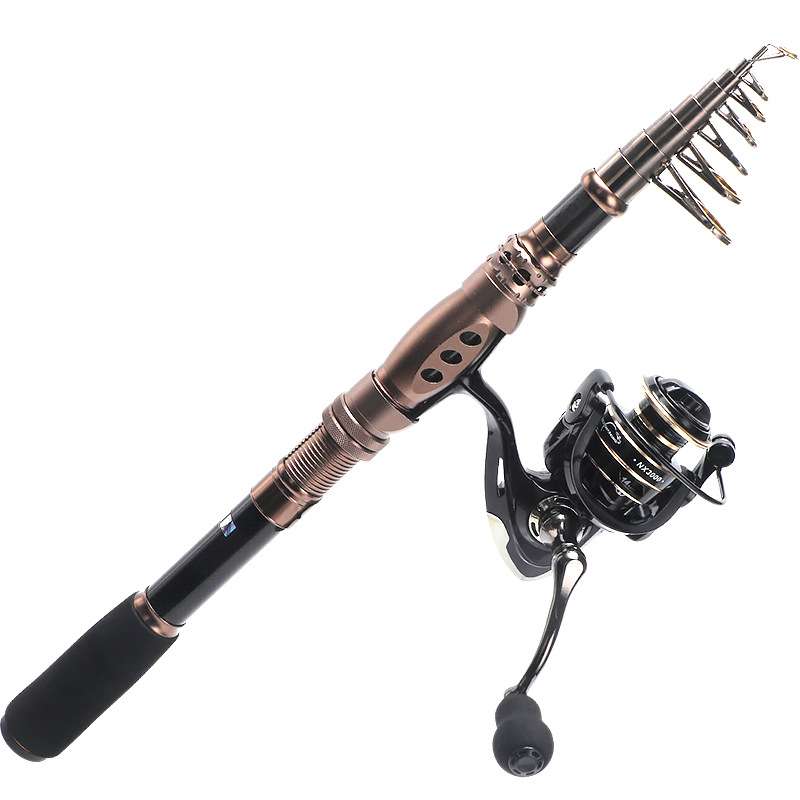
Consider the Premium Fishing Rod Set. Its core promise isn’t a list of technical jargon, but a liberating outcome: “It allows you to go to your favorite fishing spot anytime, anywhere.” How? Through smart, telescopic design using “high-density carbon fiber, which is durable, lightweight, and easy to fish!” The technology here—the “carbon fiber bushing” and “aluminum alloy reinforcement”—serves one purpose: to ensure that when the rod is extended, it performs as a unified, sensitive blank. The tech solves the storage and travel problem so completely that you forget it’s there. You’re not thinking about joints; you’re thinking about your next cast.
The Problem: “I Can’t Feel What’s Happening Down There.”
The Old Solution: Guesswork. Hoping for a visible strike or a heavy pull.
The Quiet Tech Revolution: Signal Fidelity.
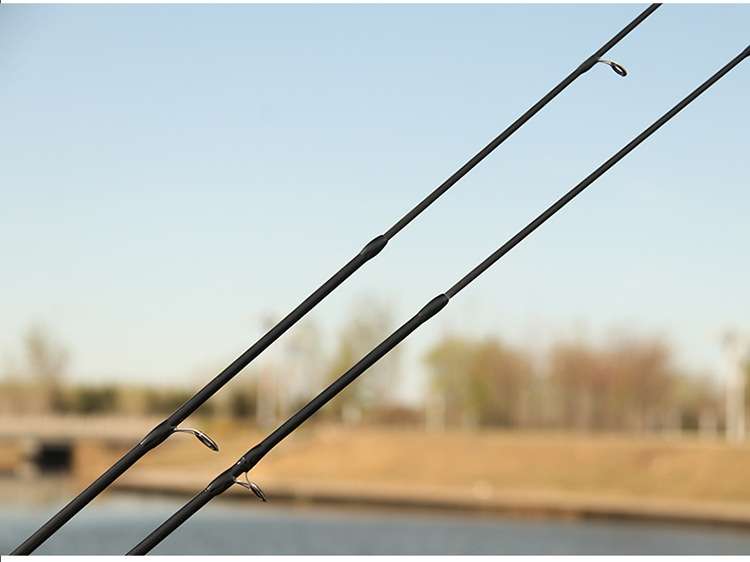
This is the heart of modern rod design. It’s about creating a pure, unmuddled path for vibration to travel from your lure, up the line, through the guides, down the blank, and into your hand. Every component is tuned for this signal chain.
Look at the Lightweight Spinning Fishing Rod. Its astonishingly low weight (101 g) is the first clue—less mass to move means less energy is needed to create a perceptible vibration. But the real magic is in its material science. Its “advanced carbon construction provides outstanding amplitude and vibration transmission.” Think of it like fiber-optic cable for feeling instead of light. It’s designed to “detect even the most subtle strikes” by minimizing internal damping. Even the “ceramic guides” are part of this system, ensuring “smooth line flow and preventing friction damage” that would create noisy, false signals. The technology isn’t a gimmick; it’s a dedicated sensory channel, turning murky uncertainty into clear, actionable information.
The Problem: “My Gear Can’t Handle a Real Fight or the Elements.”
The Old Solution: Overbuilt, heavy clubs that sacrifice sensitivity for brute strength.
The Quiet Tech Revolution: Targeted Reinforcement.
Modern materials allow engineers to put strength exactly where it’s needed, like the strategic placement of steel in a skyscraper. A fishing rod can have a delicate, sensitive tip while housing a powerful backbone lower down. This is especially critical for saltwater fishing, where corrosion is an invisible enemy.
The Portable Fishing Rod & Reel Set exemplifies this targeted approach. It’s built with “saltwater-ready construction with corrosion-resistant guides and reel seat.” This isn’t just a coating; it’s a material choice for key parts that fights environmental degradation. Furthermore, its design features a “sensitive tip design” paired with a “robust backbone.” This means the blank is engineered to flex progressively—transmitting light bites at the tip while reserving thicker, stronger material underneath to provide “absolute control when battling powerful saltwater species.” The technology creates a dual personality: gentle observer and powerful combatant, all in one seamless tool.
The Problem: “I Need More Than One Rod, But I Don’t Want a Garage Full of Gear.”
The Old Solution: Buying multiple specialized rods (a money and space drain).
The Quiet Tech Revolution: Versatile Performance Windows.
This is about designing a fishing rod with a broad, useful “sweet spot.” Instead of being hyper-specialized for a single lure weight, the best modern rods are optimized for a range that covers multiple popular techniques.
Returning to the Portable Fishing Rod & Reel Set, notice its optimization: it’s “perfectly balanced for 15-30 g lures.” This range is incredibly versatile. It can handle smaller metal jigs for sea bream, weighted soft plastics for bass, and heavier lures for surf casting. By carefully calibrating the taper and action of the blank, engineers create a one-rod combo that is competent across many scenarios, reducing the need for excessive specialization. The tech is in the calculated balance, making one rod do the job of several.
The True Measure of Tech: When You Forget It Exists
So, how do you spot this kind of thoughtful technology when you’re looking at a fishing rod for sale? Don’t just get lost in numbers. Ask what experience the features enable.
- Does the description talk about solving a problem (like portability or sensitivity) or just listing attributes?
- Are the materials and designs mentioned in the context of a better fishing day, not just a better spec sheet?
- Does the rod promise to get out of your way and let you focus on fishing?
The smartest fishing rod in your hands won’t feel “high-tech.” It will feel “right.” The weight will disappear. The cast will feel intuitive. The bite will feel obvious. The fight will feel controlled. The hassle of transport or setup will vanish. That seamless, almost invisible performance—that’s the quiet hum of real engineering at work. It’s not technology for show. It’s technology for flow.
Stop looking for the most impressive list of features. Start looking for the gear that solves your problems so completely, you can forget about the gear altogether.
Discover the quiet tech difference—view our collection of problem-solving fishing rods and combos designed for real anglers now.