


You know the scene. You scout the spot, tie the perfect knot, pick the irresistible lure, and then make what feels like a great cast—only to hear a sad fwip. The lure lands twenty feet short, or you spend the day fighting wind knots and a gritty vibration on every retrieve. You blame the wind, the line, and your technique. But the real saboteur is often the part of your fishing rod you stopped thinking about after buying it: the guides.
Those little rings the line runs through seem too simple to be important. They’re just hoops, right? Wrong. In the high-stakes physics of casting and sensitivity, the guides are the critical bottleneck. They are the interface between the energy in your fishing rod and the flight of your lure, and between a fish’s subtle nibble and the signal that reaches your hand. Ignoring them is like buying a sports car and filling it with low-grade fuel. Let’s pop the hood and look at the surprisingly complex science of these simple circles.
More Than a Hole: The Guide as Friction Manager
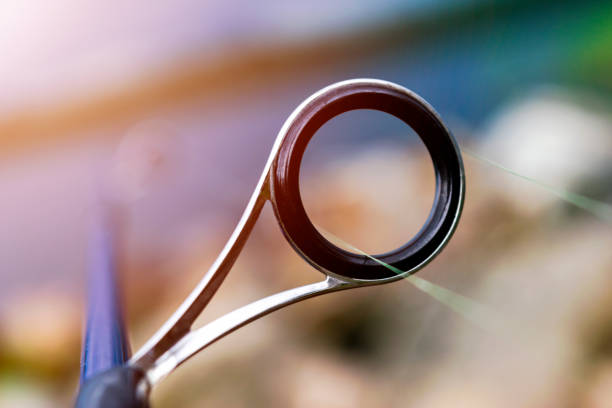
The primary, brutal job of a guide is to manage friction. When you cast, the line is accelerating from zero to high speed in milliseconds. It’s slamming against the inside of the guide with significant force. A rough, poorly finished guide ring acts like sandpaper on your line. This friction steals energy—energy that should be propelling your lure forward. That’s your short cast explained.
But the damage isn’t just to your distance. This friction generates heat. A lot of it. On a long cast or a fast retrieve, especially with modern braided lines, that heat can be enough to actually weaken or even melt the line’s outer sheath. That creates a hidden weak spot, a time bomb waiting to explode on your next big hookset. A good guide’s first duty is to be incredibly, consistently smooth to minimize this energy theft and heat build-up.
The Material Makeover: From Metal to Ceramic and Beyond
This is where material science comes in. Old-school metal guides were… okay. But they could groove and rust and often weren’t smooth enough for modern, thin lines.
Enter engineered ceramics and composites. Materials like aluminum oxide (a type of ceramic) or silicon carbide are game-changers. They are harder than sand and most dirt particles. This means debris gets crushed or pushed aside instead of embedding into the guide and turning it into a file against your line. This hardness translates directly to durability and sustained smoothness.
A guide made from ceramic or silicon carbide creates a glass-slick path. The line flows over it with minimal resistance. You feel this as a smoother, quieter, more energetic cast. The fishing rod feels like it’s releasing the lure, not fighting it. For a fishing rod built for high-frequency casting or finesse applications, this isn’t a luxury; it’s the foundation of performance.
The Sensitivity Link: Your Information Superhighway
Now, let’s flip the scenario. A fish bites. That tiny tap or weight change travels up the taut line as a minuscule vibration. Think of this signal as a whisper.
A rough or sticky guide will muffle that whisper. It adds “noise” (physical vibration from friction) and absorbs some of the signal’s energy. A perfectly smooth, hard guide, however, acts like a fiber-optic cable for feel. It transmits that whisper with high fidelity directly to the fishing rod blank and into your hands.
This is why on a truly sensitive fishing rod, you don’t just feel a bite; you can often distinguish the type of bite—a sharp tap from a trout vs. a soft tic of a bass sucking in a plastic worm vs. the steady pull of dragging bottom. The guides are protecting the clarity of that signal from the water to your brain. A fishing rod praised for its enhanced sensitivity absolutely depends on premium guides to deliver on that promise.
Case in Point: The Finesse Specialist
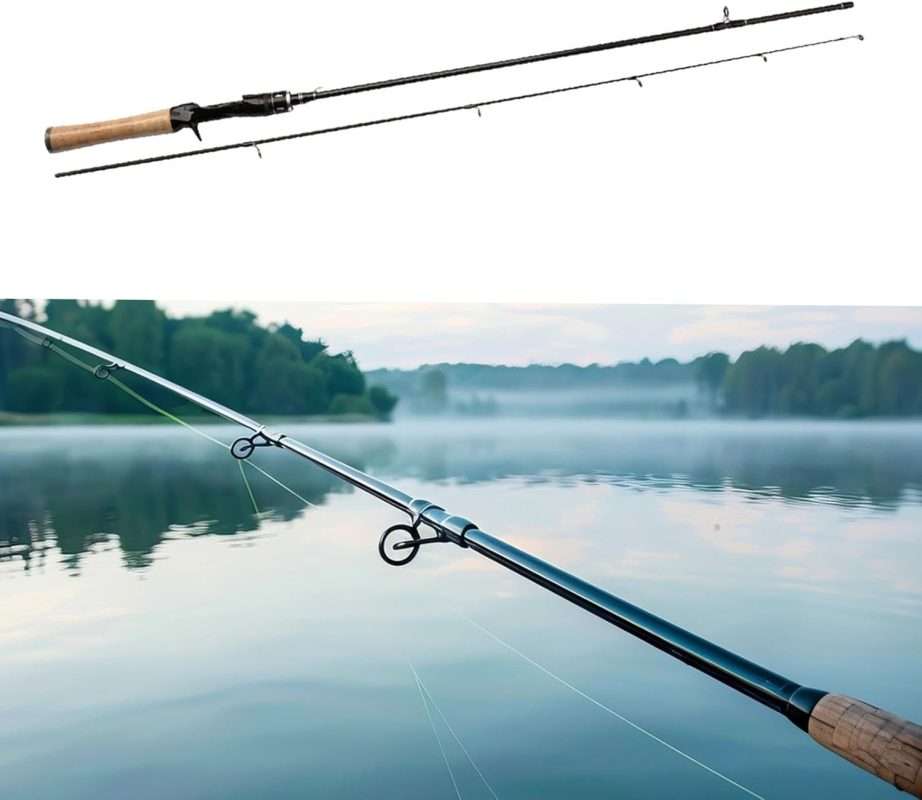
To see this philosophy in action, consider the needs of a dedicated finesse angler. They’re using light lines and tiny lures, and their entire game is based on detecting impossibly subtle bites. Every component must be optimized for signal clarity and minimal interference.
The Lightweight Spinning Fishing Rod is engineered for this exact purpose. Notice its focus isn’t just on the carbon fiber blank. It specifically highlights its Premium Ceramic Guides. Why? Because for the angler targeting trout or panfish, those guides are what ensure smooth line flow and prevent friction damage. They are the guardians of the delicate feedback loop. The rod’s goal is to transform subtle indications into confident hooksets, and that transformation happens through the guides. Without them performing flawlessly, even the most sensitive blank is handicapped.
Beyond the Ring: Frame, Alignment, and the Complete System
The ring material is the star, but the supporting cast matters too. The guide frame must be strong and corrosion-resistant, especially for saltwater use. A bent frame can misalign the ring, creating a pinch point. The guides must also be perfectly aligned along the spine of the rod during building. A misaligned guide creates unnecessary bending and friction in the line path, causing those frustrating wind knots and reducing casting efficiency.
It’s a complete system: a strong frame holds an incredibly hard, smooth ring in perfect alignment to create a seamless, low-friction highway for your line. When this system is executed well, you stop thinking about it entirely—which is the highest compliment a piece of engineering can receive.
Frequently Asked Questions (FAQ)
Q: Are more guides on a fishing rod always better?
A: Not necessarily. The number and size of guides are part of the rod’s “taper” design, meant to distribute stress along the blank and control the line during a cast. Too few guides can create large, inefficient loops of line that slap the rod and cause friction. Too many can add unnecessary weight. A well-designed guide train from a reputable manufacturer is optimized for that specific rod model’s action.
Q: I fish in saltwater. Do I need special guides?
A: Absolutely. Saltwater is brutally corrosive. Look for guides with frames made from stainless steel or aluminum alloys that are explicitly described as corrosion-resistant. The rings themselves should be hard materials like aluminum oxide or silicone carbide, which are inert and won’t rust. Avoid basic stainless steel rings, which can still pit and corrode over time.
Q: Can damaged guides be repaired, or do I need a new fishing rod?
A: A single damaged guide can often be replaced by a fishing rod repair shop, which is far more economical than replacing the entire fishing rod. A cracked or grooved ceramic insert can be swapped out, or a bent frame can sometimes be straightened. However, if multiple guides are damaged or the blank itself is compromised near the guide, a replacement rod might be the better option.
The Upgrade You Can Feel
You can’t upgrade the guides on most fishing rods after purchase. This makes choosing a rod with quality guides from the start a critical and often overlooked decision. It’s a hidden spec that separates a good fishing rod from a great one.
The next time you’re evaluating a fishing rod, don’t just flex the blank. Run your fingernail gently inside the guide rings. Feel for the glassy smoothness of a ceramic or silicon carbide ring versus the slightly rougher feel of a basic metal one. Look for sturdy, well-finished frames. This tiny detail is a huge tell about the overall build quality and performance philosophy behind the fishing rod.
Because in the end, your connection to the entire underwater world—from the power of your cast to the faintest whisper of a bite—flows through those few small circles. Make sure they’re built to carry the message.
Upgrade the details that matter—choose a fishing rod with premium guides and feel the difference on every cast and every bite.