


Imagine this: a mirror-like lake at dawn, low-hanging mist. Your float stands quietly on the water, surrounded by silence. Suddenly, without warning, it dips gracefully and steadily. Your heartbeat skips—this isn’t a quick bass bite, but a massive carp silently asserting its dominion. You lift the fishing rod, feeling a heavy, stubborn force, like hooking a submerged log, followed by deep, powerful struggles. You are facing a sage and powerhouse of freshwater: the carp.
Carp fishing is less a sport and more a test of patience, strategy, and gear reliability. These fish are cunning and powerful, living hidden lives in deep, calm waters. Conquering them requires more than luck: it demands gear tuned for the “silent water war” and the corresponding mindset. Today, we dive into this quiet yet intense contest.
Core Principle: Why You Need “Rod Backbone” Instead of “Tip Sensitivity”
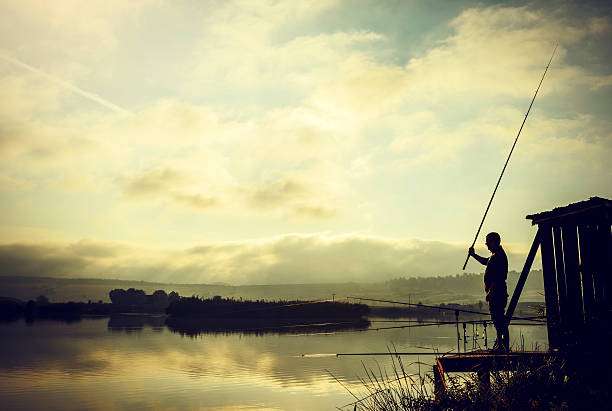
If you’re transitioning from lure or trout fishing to carp, first discard a common notion: extreme tip sensitivity is not the priority. Carp fishing focuses on patience and control.
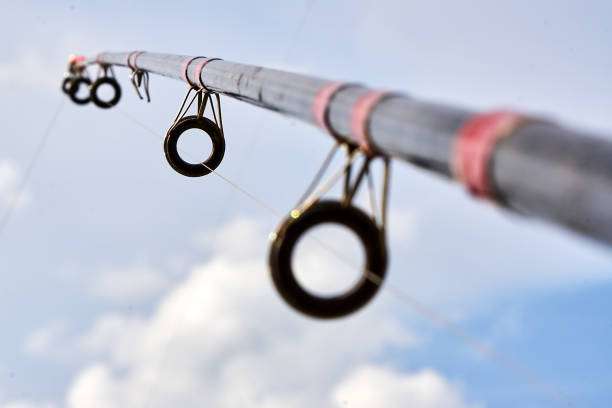
Common carp methods like ledgering or using a method feeder require casting rigs with heavy weights or bait cages accurately tens of meters away. This demands a rod of sufficient length (usually over 3 meters) to provide leverage for long casts.
Even more critical is the fishing rod backbone. A carp’s bite can be subtle, but once hooked, its attack follows a “three-stage sequence”:
- Short, heavy sprint attempting to dive into weeds or deep holes
- Long, slow, stubborn “walking” resistance
- One or two final desperate bursts
Your fishing rod’s mid-to-handle section must act like a strong spring: applying continuous pressure, dissipating the fish’s sprints, and lifting it gently when it tries to “sit on bottom.”
A medium-fast (MF) or medium (M) fishing rod is often ideal. It allows greater bend during fish bursts, protecting thinner leader lines while effectively transmitting angler force—very different from ultra-fast lure rods designed for instant strikes.
Gear Analysis: Building a Reliable System for the Long Game
1. Fishing Rod: Balance of Length and Power
Length is fundamental. A 3.6 m to 3.9 m fishing rod (12–13 ft) is common for lake bank fishing. It provides excellent casting ability and fish control radius. The rod’s backbone is key, often achieved with high-density carbon or a composite multi-layer wrap, balancing weight and strength.
Example: a high-density carbon three-section fishing rod offers:
- Lengths of 2.42 m–2.73 m for sufficient casting range
- Medium-Large (ML) stiffness and Fast/Extra-Fast action: stiff rear for casting and sustained pressure, tip recovery for clear strike feedback
- Lightweight carbon construction for reduced fatigue during long sessions
2. Reel: Line Capacity is confidence, and drag is a lifeline.
Carp are known for long runs. A reel with ample line capacity (typically 200 m of 20 lb braid or 12 lb+ fluorocarbon) is crucial. The core focus is the drag system: maximum drag (10 kg/22 lb+) with ultra-smooth output is vital. Abrupt resistance can snap the line. High-quality carbon fiber drag washers or multi-disc systems ensure consistency. Gear ratio is secondary; mid-low ratios (e.g., 5.2:1) aid stable retrieves and conserve energy.
3. Rigs & Accessories: The Art of Concealment and Strength
- Invisible rigs: fluorocarbon leaders with subtle hooks (weighted or unweighted)
- Bite alarms: detect subtle movements before tip lift
- Strong bank gear: chair, fishing rod rests, and large landing net for prolonged battles
Mindset: From Hunter to Strategist
Once gear is ready, upgrade your mindset. Carp fishing is about setting traps, waiting, and precise execution.
- Reconnaissance: scan for “fish stars” (bubbles from feeding carp), identifying potential spots—weed edges, depth transitions, submerged shelves
- Accurate baiting: use a baiting spoon or feeder boat to place particle baits (corn, pellets, boilies) on target spots, creating a feeding zone
- Extreme patience: set rigs, activate alarms, then wait—could be 10 minutes or 5 hours. Observe, reflect, and enjoy tranquility
- Calm hook setting & fight: when the alarm sounds, don’t jerk the rod. Lift the tip gently, feel the weight, then smoothly set the hook. Apply consistent pressure, use rod backbone to tire fish; avoid brute force
Why a Multi-Purpose Rod is a Smart Entry Choice
New carp anglers may hesitate to invest in expensive specialized carp rods. A versatile rod allows:
- Lower entry cost
- Experience core carp fishing mechanics
- Test personal interest before committing to high-end gear
The previously mentioned three-section carbon rod, adaptable for carp, trout, fly, and lure fishing, becomes an advantage. It may not be ultra-long-distance specialized, but it casts 40–60 m accurately with small bait cages and controls medium-sized carp reliably. The multi-section design is convenient for transport and exploration.
This serves as an “entry kit,” allowing skill development and interest confirmation before moving to specialized, expensive gear. It reduces risk while providing an addictive, genuine experience.
FAQ
Q: Do I need an extremely long rod (13 ft+) for carp fishing?
A: Not absolutely, but longer rods offer clear advantages: farther casting, better leverage (especially with banks and weeds), and more sensitive tip feedback. For large lakes, long rods are almost standard. For smaller ponds or canals, rods around 2.4–2.7 m are flexible and effective, especially for precise casts.
Q: Can I use my lure gear (M-fast rod, high-speed reel) for carp?
A: Occasionally, but it’s like taking a sports car off-road. Fast-action lure rods lack mid-section backbone to buffer sustained lateral carp pulls, risking hook or line break. High-speed reels hinder stable retrieval and endurance, and drag may be insufficient. If attempted, use a heavier line and loosen the drag. For safety and experience, proper carp gear is recommended.
Carp fishing is a dialogue with a different rhythm underwater. It requires slowing down, observing, thinking, and relying on a carefully prepared, reliable system to translate strategy into tangible reward. Your gear becomes an extension of your patience and wisdom.

Next time facing a serene lake, approach it with a carp angler’s mindset. Start with a rod that balances length, backbone, and portability. While it may not be your flashiest piece of equipment, the slow, immense power from the depths will prove that excitement under calm water rivals any intense chase.