


So, you had a great day on the saltwater. The sun was out, you felt a few good tugs on the line, and you came home with that salty, satisfied feeling. You gave your gear a quick rinse at the dock sprayer, tossed it in the trunk, and called it a day. Good enough, right?
Fast forward three months. You pull out your prized fishing rod for another trip, and there it is: a faint, gritty stiffness in the reel seat. A tiny, almost invisible speck of rust blooming on a guide ring. The once-smooth retrieve now has a subtle, annoying grind. That heart-sinking moment isn’t bad luck; it’s a bill coming due. The ocean always collects.
Here’s the uncomfortable truth many casual saltwater anglers learn too late: saltwater fishing isn’t just a different type of fishing; it’s a war of attrition. And the most common casualty isn’t the one that got away—it’s the gear you trusted. But this isn’t a doom-and-gloom story. It’s a liberation story. Because with the right gear and a simple, non-negotiable ritual, you can stop fighting a losing battle and start enjoying gear that’s built to last.
The Silent Enemy: It’s Not Just About Rust
When we think “saltwater damage,” we picture orange, flaky rust. But salt is a more insidious enemy than that. It’s a corrosive that works in ways you don’t always see immediately.
- The Creeping Seize: Salt crystals form in the microscopic gaps of your reel’s gears, bearings, and drag washers. They don’t just cause rust; they act like abrasive sand, grinding down precision-machined parts. That “smooth feel” slowly becomes a gritty one, and one day, the drag just won’t function smoothly during a critical fight.
- The Guide Killer: Modern guides have tough, smooth rings (ceramic, aluminum oxide) set in metal frames. Saltwater attacks the frame, causing pitting and corrosion. Even a tiny pit can create a sharp edge that will saw through your expensive braided line at the worst possible moment.
- The Blank Eater: On rod blanks, especially near the ferrules (joints) and under the reel seat, salt can seep into the epoxy and carbon layers, potentially causing delamination over time. It weakens the structure you’re relying on to bend and fight big fish.
The point is, the damage is often slow, invisible, and cumulative. You don’t notice it day-to-day until one day you do—and by then, it’s often too late for a simple fix.
The 5-Minute Salvation Ritual
Everyone knows you should rinse your gear. But “rinse” is too vague. This is the exact, non-negotiable ritual that will save your investment. Do this every single time you leave saltwater.
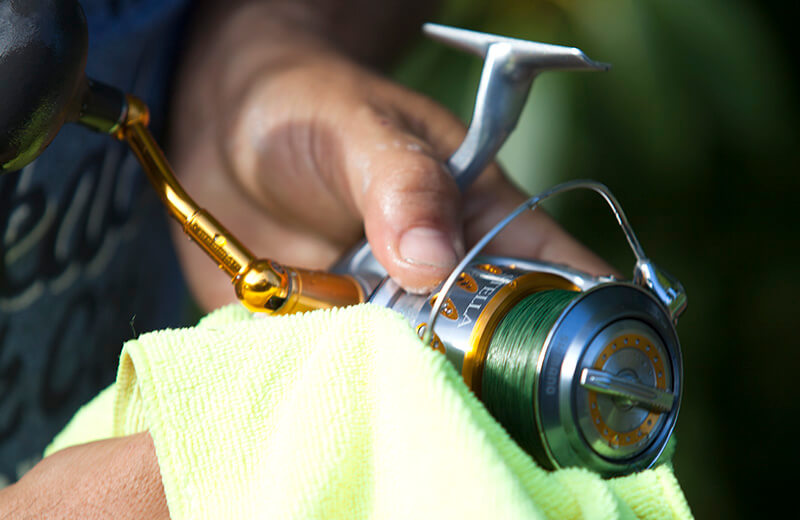
- The Pre-Pack Rinse: Before you even think about loading the car, find a source of fresh, lukewarm water. A jug you brought, a hose at the ramp, a water bottle—anything. Gently rinse the entire fishing rod and reel. Focus the stream on the reel (especially the line roller and bail arm), every single guide, the reel seat, and the handle. You’re not pressure-washing; you’re dissolving.
- The Detailed Dry: This is the step most people skip, and it’s critical. Use a soft, absorbent microfiber towel (an old t-shirt works in a pinch) to gently wipe down every part of the rod and reel. Get the water out from under the reel seat hoods. Dry the handle. Wipe the reel body. Leaving it wet in a rod case or your trunk is an invitation for trapped moisture to do its corrosive work.
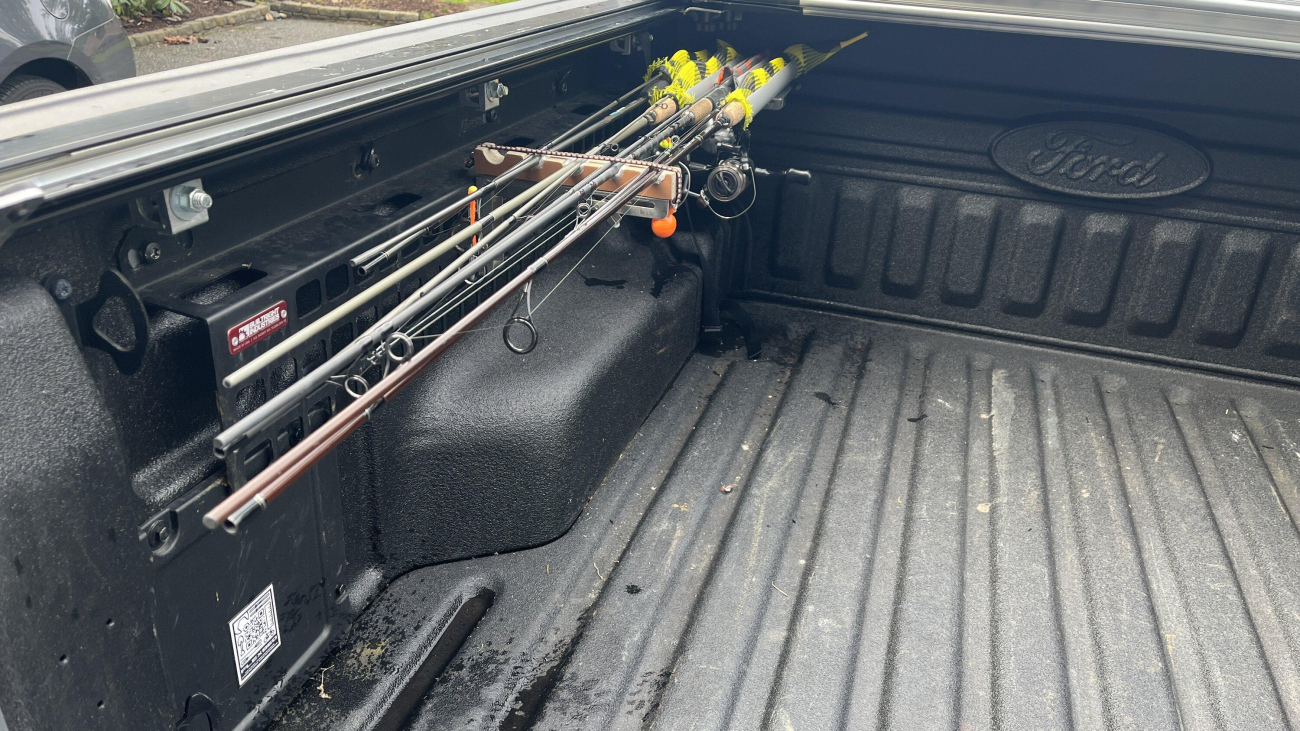
- The Storage Mindset: When you get home, don’t just lean it in a corner. If possible, store rods vertically. Most importantly, back your reel’s drag all the way off. This relieves constant pressure on the drag washers, preventing them from taking a permanent set. A set drag is a failed drag.
The Right Tool for the War: It Starts with Your Rod
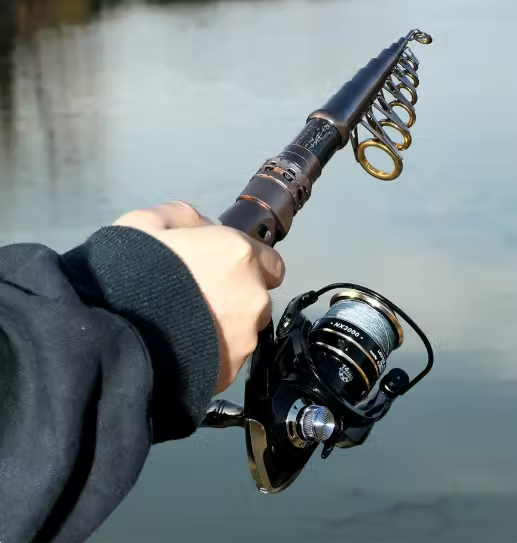
You can be meticulous with maintenance, but if you’re starting with gear that isn’t designed for the fight, you’re just delaying the inevitable. This is where choosing the right fishing rod becomes a strategic decision, not just a performance one.
You need a rod engineered with the enemy in mind from the very first sketch. It needs to have corrosion resistance baked into its DNA, not just slapped on as an afterthought. Let’s look at a rod that is designed with this exact warfare in focus. The Portable Fishing Rod & Reel Set isn’t just portable; it’s a saltwater-ready system built for survival.
It doesn’t just mention performance; it highlights its defenses: “Featuring saltwater-ready construction with corrosion-resistant guides and reel seat.” This means the metals chosen for the critical hardware—the parts that touch saltwater and sweat most—are selected specifically to resist oxidation. The guides aren’t just smooth; their frames are designed to fight the environment.
Furthermore, its construction speaks to durability under pressure. It’s built with a “sensitive tip design” but paired with a “robust backbone.” In a maintenance context, this robust construction from “high-density carbon fiber” isn’t just about fighting fish; it’s about resisting the physical knocks and stresses of coastal environments—rocky shores, boat gunnels, sand—that can compromise lesser blanks.
Choosing a rod like this is the ultimate form of preventative maintenance. You’re starting with a partner that’s already wearing armor.
The Supporting Actor: Your Reel is the Front Line
Your reel is the most complex, vulnerable piece of equipment you own. In saltwater, it’s not an accessory; it’s the frontline soldier. A reel that isn’t built for this environment will fail, no matter how much you rinse it.
Look for reels that advertise sealed construction. For example, a reel designed for the task will have “double-sealed never-rust stainless steel polymer bearings” and an “extremely strong CNC aluminum frame,” like the one mentioned in our reel specs. These aren’t luxury features for saltwater; they are the bare minimum for longevity. The seals keep the grit out, and the corrosion-resistant materials fight what gets in.
The Mindset Shift: From Consumable to Companion
This is the most important part. In freshwater, you might think of gear as semi-permanent. In saltwater, if you treat it as disposable, it will be. The shift is to view your fishing rod and reel not as toys, but as precision tools worthy of care.
That simple 5-minute post-trip ritual isn’t a chore; it’s an act of respect for the engineering and the investment. It’s what ensures that the “superior performance and reliability” promised on the tag isn’t just for the first trip, but for the fiftieth.
Stop letting the ocean win by default. Arm yourself with knowledge, a simple routine, and gear that’s built to stand beside you in the salt. Your future self—the one tying a lure on a rod that still feels crisp and smooth, season after season—will thank you.
Gear up for the long haul. Explore our saltwater-ready fishing rods and reels built to withstand the elements season after season.